
Why Don't My Teammates See Things the Same Way?
Explore practices for understanding and bridging differences in perspectives within teams, supported by research on trust, communication, and conflict.
The question
Why do my teammates not see things the same way I do?

Overview
Teammates often perceive situations differently due to varying levels of trust, communication habits, and approaches to disagreement. Research on team dynamics offers several distinct practices that can help you understand and bridge these differences, though no single approach fits every team.
The following cards describe three evidence-backed practices: observing and adjusting the team's trust and social exchanges, engaging in task-focused discussions about goals and strategies, and prioritizing goal-setting to direct attention and effort. Each practice has trade-offs in effort and may require others' participation.
Build High-Trust Communication Practices

If teammates seem distant or unresponsive, you could try increasing the frequency of social exchanges and proactive coordination. This might involve sharing brief updates about your work schedule, checking in informally, and addressing disagreements early with a focus on problem-solving together. These actions require ongoing effort and participation from others.
Evidence suggests that virtual teams maintaining high trust often use frequent social exchanges, near real-time communication, and collective problem-solving. These teams show confidence in completing tasks despite setbacks and express gratitude at project end. However, this pattern was observed in teams that already had high trust, so building it from low trust may require additional steps.
Focus Disagreements on Tasks, Not People

When you and your teammates disagree, try steering the conversation toward the specific tasks or strategies involved rather than personal styles. For example, you might say, 'I see the goal differently-let's compare our approaches' instead of criticizing how someone communicates. This may require you to pause and reframe discussions in the moment.
In teams where members view collaboration as a way to demonstrate competence (called high-PPGO), disagreements about tasks can actually improve collaboration by signaling commitment and surfacing diverse ideas. The evidence suggests this works best when the team minimizes relationship-focused conflict. However, the benefit was studied in teams with that specific motivational orientation, so it may not apply equally in all groups.
Use Goal Setting to Direct Attention
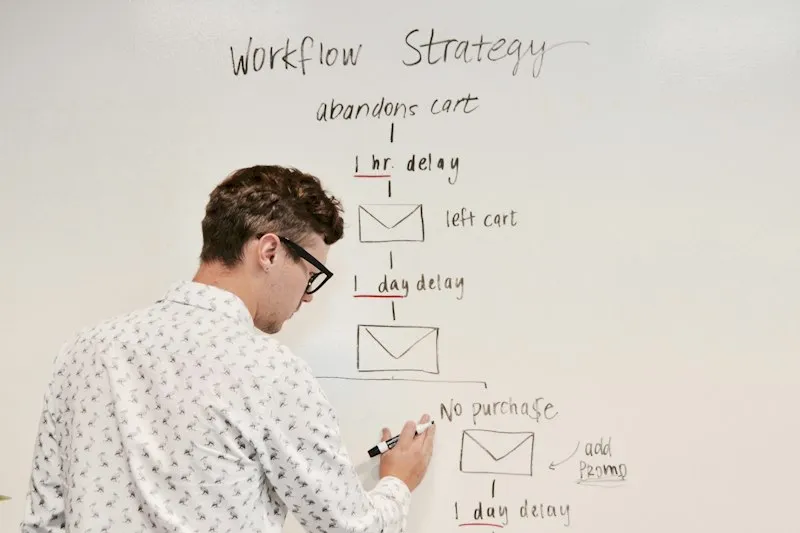
To align your team's differing views, you might propose setting shared goals at the start of a project. This could involve discussing what success looks like and how each person's tasks contribute. It requires time for agreement and the willingness of others to commit to the goals.
Research shows a bidirectional relationship between collaboration and goal setting: clear goals direct attention, increase effort, and help the team use task-relevant strategies. In turn, collaboration facilitates the exchange needed to set meaningful goals. This finding comes from a review of team dynamics and does not guarantee that goal setting alone will resolve all perspective differences, but it offers a structured starting point.
Take it further
Consider Your Team
Which of these practices feels most relevant to a situation where you and your teammates have seen things differently?
Talk it out
Starting a Dialogue
What has helped in the past when your team has had different views on how to proceed?
References
Sources & evidence
4 research papers informed this article. The numbers beside each section link here, and each DOI opens the original paper.
Source 1:Communication and Trust in Global Virtual Teams
Sirkka L. Järvenpää, Dorothy E. Leidner (1999). Communication and Trust in Global Virtual Teams. DOI 10.1287/orsc.10.6.791
DOI 10.1287/orsc.10.6.791articleSource 2:Relationship Conflict, Conflict Management, and Performance of Information Technology Teams
Nesterkin, Dmitriy A., Porterfield, Tobin E., Li, Xiaolin (2016). Relationship Conflict, Conflict Management, and Performance of Information Technology Teams. DOI 10.1080/08874417.2016.1153893
Source 3:To collaborate or not? The moderating effects of team conflict on performance‐prove goal orientation, collaboration, and team performance
E. Downes, Patrick, Gonzalez‐Mulé, Erik, Seong, Jee Young, Park, Won‐Woo (2021). To collaborate or not? The moderating effects of team conflict on performance‐prove goal orientation, collaboration, and team performance. DOI 10.1111/joop.12360
DOI 10.1111/joop.12360articleSource 4:Why and When Hierarchy Impacts Team Effectiveness: A Meta-Analytic Integration
Greer, Lindred, Jong, Bart de, Schouten, Maartje, Dannals, Jennifer (2017). Why and When Hierarchy Impacts Team Effectiveness: A Meta-Analytic Integration. DOI 10.2139/ssrn.3069867
DOI 10.2139/ssrn.3069867article
Next read
Keep reading
 MomentsWhy Do I Often Misunderstand What Others Are Thinking or Expecting?Understand the mental habit behind misunderstandings and a quick tool to get back on the same page.2 min read
 DecisionWhy Can't My Team and I Agree on the Same Mental Picture?Understand why your team lacks a shared mental picture and choose a strategy to align understanding based on your current capacity.3 min read
- ExplainerAutonomy, Competence, and RelatednessLearn what autonomy, competence, and relatedness are according to self-determination theory and why they matter for well-being and motivation.5 min read
- How-toRegain a Sense of Autonomy When You Feel You Have No SayFeeling stuck and unmotivated when you have no say? This article shows one way to identify and support your psychological need for autonomy.2 min read
 DecisionWhy Do I Want Independence but Feel Lonely?Learn how the desire for autonomy and need for connection can coexist, and explore three strategies to balance independence and relatedness.3 min read
 How-toWhy Does My Team Argue About Priorities Instead of Solving the Real Problem?Understand why team arguments about priorities may signal low trust, turning helpful task debate into personal conflict. Learn how to address the real issue.4 min read