

Active procrastination is a deliberate form of delay in which a person intentionally postpones a task, works well under time pressure, and still completes the task before the deadline. Passive procrastination is the traditional form of procrastination in which a person delays tasks until the last minute, often with guilt or distress, and is more likely to fail to finish the task on time. The key difference lies in the intention and experience behind the delay: active procrastination is a chosen, purposeful strategy, while passive procrastination is an unplanned, often distressing failure to act.
Research distinguishes these two patterns because they are associated with different outcomes and personality profiles. Active procrastination has been linked to healthier characteristics such as higher emotional intelligence and persistence, whereas passive procrastination is more often connected to negative academic functioning, poor self-regulation, and maladaptive traits. Understanding this distinction helps clarify that not all delay is harmful.
What Does Each Type Look Like?
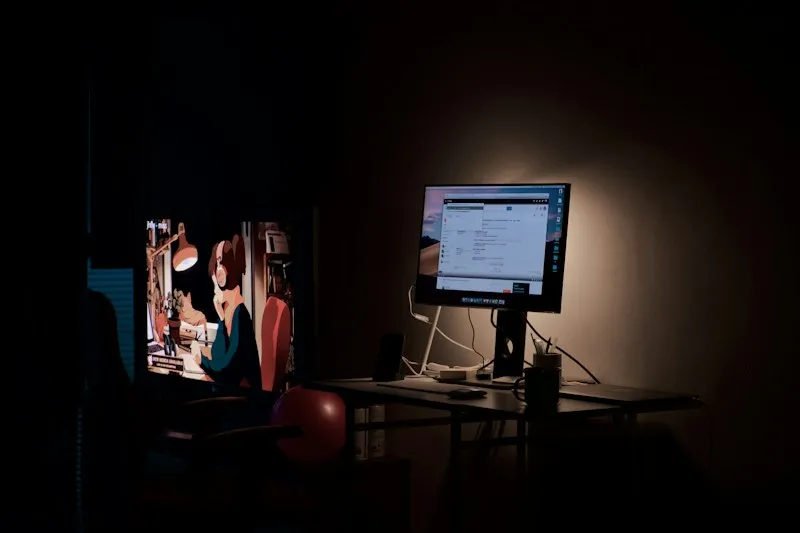
Active procrastination is a deliberate form of delay in which a person intentionally postpones a task, works well under time pressure, and still completes the task before the deadline. For example, a student might choose to work on a project the night before its due date, using the pressure to focus and produce quality work. This pattern is described as a potentially helpful time-management strategy, distinct from the distress-driven delay of passive procrastination.
Passive procrastination, in contrast, is the traditional form of procrastination where a person delays tasks until the last minute, often with guilt or distress, and is more likely to fail to finish the task on time. This pattern is described as self-destructive and distressing, driven by difficulty deciding or acting in time. A person might repeatedly put off starting a report despite feeling anxious about the deadline, eventually rushing to complete it or missing the deadline altogether.
Take it further
Opening the Conversation
Have you ever noticed a difference between times when you chose to delay something and times when delaying just seemed to happen?
Reflect in Mneno
How Are They Studied?

Researchers distinguish active from passive procrastination by examining their relationships with personality traits, self-regulation, and actual behavior. Active procrastinators have been found to be higher than passive procrastinators in emotional intelligence, persistence, self-directedness, and cooperation. They were lower in harm avoidance and novelty seeking, meaning they were less pessimistic, less fatigable, less shy, less wary of the unexpected, less impulsive, more rule-bound, and less exploratory.
These differences suggest that active procrastinators possess a profile of self-regulation and emotional stability that allows them to delay tasks without negative consequences. In contrast, passive procrastination is described as a pattern marked by self-doubt, anxiety, distress, and missed deadlines. The literature includes work distinguishing active procrastination from both passive procrastination and general task avoidance, comparing these constructs in relation to self-regulated learning, attitudes, and performance.
What Outcomes Are Observed?

Passive procrastination is linked to specific behavioral delays: higher passive procrastination was associated with slower assignment progress across an observation period. Students one standard deviation above the mean in passive procrastination progressed 3.67% less per day, with a compensating quadratic acceleration closer to the deadline. Passive procrastination was positively correlated with both predicted delay and actual modeled delay, meaning it predicts real-world putting off of tasks.
In contrast, active procrastination was not correlated with either predicted delay or modeled delay. This indicates that active procrastinators do not show the same behavioral lag. The ability to meet deadlines showed a strong negative correlation with passive procrastination, suggesting that deadline management may be the clearest difference between the two types. Traditional passive procrastination predicts behavioral delay, whereas active procrastination does not.
How Do They Relate to Each Other?

Active procrastination is inversely related to passive procrastination, meaning that people who tend toward one pattern tend not to show the other. This inverse relationship supports the idea that they are distinct patterns with different outcomes. The source suggests that deadline management may be the clearest observable difference: people who deliberately delay but still meet deadlines are likely practicing active procrastination, while those who miss deadlines or rush with distress are engaging in passive procrastination.
This distinction is important because it challenges the assumption that all procrastination is harmful. Active procrastination can be adaptive in some situations, whereas passive procrastination is more often linked to negative academic functioning, poor self-regulation, and other maladaptive traits. The two types are behaviorally and psychologically different, requiring different approaches for understanding and addressing each pattern.
FAQ
Common questions
Each answer is linked to its research.
Can someone switch between active and passive procrastination?
The excerpts do not directly address whether an individual can switch between the two patterns. However, the research characterizes active and passive procrastination as distinct patterns with different personality profiles and outcomes. Since active procrastination is linked to higher emotional intelligence, persistence, and self-directedness, while passive procrastination is linked to self-doubt and anxiety, a person may be more prone to one pattern based on their underlying traits. The source does not describe a mechanism for switching.
SourcesS11S12All sources
Is active procrastination always beneficial?
The excerpts describe active procrastination as a potentially helpful time-management strategy that can be adaptive in some situations. However, they do not claim it is always beneficial. The source notes that active procrastination is linked to healthier personality profiles and does not predict behavioral delay like passive procrastination does. But the research also emphasizes that it is a deliberate choice that works under time pressure, which may not suit every task or person.
SourcesS1S3All sources
How is passive procrastination measured in research?
In the research, passive procrastination is assessed through its associations with actual delay. For example, one study measured assignment progress daily and found that higher passive procrastination predicted slower daily progress. Additionally, passive procrastination was positively correlated with both predicted delay (self-reported expectations of delay) and actual modeled delay (observed delay in completing tasks). These measures distinguish it from active procrastination, which showed no such correlations.
SourcesS2S6S7All sources
Next read
Keep reading
Nearby guides picked by the editors of this article.
 MomentsWhy do I always underestimate how long tasks will take?If you underestimate tasks, you're not alone. Learn why this happens and a quick tool to improve time estimates.3 min read
 DecisionWhat Are the Real Risks of Delaying Tasks?Explore the trade-offs of procrastination: academic risks, time pressure, and how to choose a response based on your current capacity.4 min read
 How-toHow can I tell if my procrastination is normal or a serious problem?Learn how to distinguish between typical delay and problematic procrastination using simple context-based questions about the pattern's impact and your4 min read
- TechniquesHow Procrastination Affects Your LifeProcrastination is linked to lower academic grades, reduced well-being, and poorer self-regulation. Explore the evidence without assuming outcomes.2 min read
 TechniquesHow to Measure ProcrastinationCompare three ways to measure procrastination: self-report scales, external ratings, and distinguishing active from passive delay.3 min read
 TechniquesWhy You Get Overwhelmed by Big Goals and Can't StartExplore techniques to break big goals into manageable steps to reduce overwhelm and get started.3 min read
References
Sources & evidence
4 research papers informed this article. The numbers beside each section link here, and each DOI opens the original paper.
Source 1:Active and passive procrastination in terms of temperament and character
Zohar, Ada H., Shimone, Lior Pesah, Hen, Meirav (2019). Active and passive procrastination in terms of temperament and character. DOI 10.7717/peerj.6988
articleSource 2:Comparing effects of active and passive procrastination: A field study of behavioral delay
Wessel, Jason, Bradley, Graham L., Hood, Michelle (2019). Comparing effects of active and passive procrastination: A field study of behavioral delay. DOI 10.1016/j.paid.2018.11.020
Source 3:The role of personality traits and need for cognition in active procrastination
Zhou, Mingming (2019). The role of personality traits and need for cognition in active procrastination. DOI 10.1016/j.actpsy.2019.102883
Source 4:A Comparison of Active and Passive Procrastination in Relation to Academic Motivation
Seo, Eun Hee (2013). A Comparison of Active and Passive Procrastination in Relation to Academic Motivation. DOI 10.2224/sbp.2013.41.5.777