
Why do I constantly get distracted by temptations like social media when I need to work?
Understand why social media distracts you at work and compare three strategies to manage the temptation, each with different effort and trade-offs.
The question underneath
Why do I constantly get distracted by temptations like social media when I need to work?
Sound familiar?
You sit down to work and suddenly you're scrolling through social media, wondering how you got pulled away.
First, get oriented
Before you choose
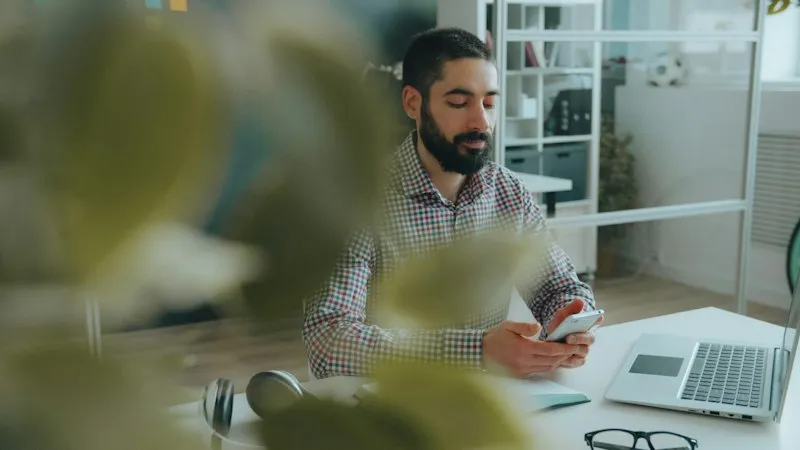
Social media can be especially distracting during work because it offers immediate positive feelings [sourceRef: 1] and can shift your attention away from your intended task [sourceRef: 3]. This pull is stronger when you're facing an unpleasant task and are looking for an escape [sourceRef: 6].
There is no single right way to handle this, only trade-offs that depend on your current capacity. The three strategies below range from reducing the pressure of temptation to actively building self-control. You can choose one based on what you feel able to do right now.
Find your starting point
What feels closest to your situation right now?
Choose the situation closest to yours. We’ll take you to that path so you can weigh it without committing to anything.
- See this pathPathI want a quick, low-effort solution to block the distraction now.
- See this pathPathI'm willing to practice delaying the urge for short periods.
- See this pathPathI'm ready to invest time in building stronger self-control habits.
Still unsure? Ask yourself:
Which of these strategies feels most doable for you right now, and what would be a first step you could take?
Compare your paths
Three ways forward, different trade-offs
There is no perfect choice. Skim the trade-offs, then read the path that fits what you can manage today.
Path
Strategy 1: Reduce Immediate Temptation
This strategy asks you to limit your exposure to social media during work hours. You might turn off notifications, use a website blocker, or keep your phone in another room. The immediate effort is low-you set up a simple barrier that reduces the chance of distraction [sourceRef: 2][sourceRef: 7].
Research supports that reducing temptations in your environment makes impulsive diversions less likely [sourceRef: 5][sourceRef: 7]. However, this approach relies on the barrier staying in place and doesn't build your ability to resist temptation when the barrier is absent [sourceRef: 2]. The trade-off is that you avoid the struggle now but may not strengthen your self-control for situations where the barrier isn't available.
Path
Strategy 2: Delay the Distraction
This approach asks you to recognize the urge to check social media but decide to postpone it until after a short work period, such as 20 minutes. The immediate effort is moderate because it requires you to notice the temptation and actively choose to delay [sourceRef: 2].
Research indicates that deliberately delaying distractions can help maintain focus on planned work [sourceRef: 2]. This strategy asks for a small but consistent act of self-control, which may feel difficult at first [sourceRef: 4]. The trade-off is that you'll need to practice this skill repeatedly, and it may not work as well when you're already mentally tired.
Path
Strategy 3: Build Self-Control Habits
This strategy involves gradually strengthening your self-control by practicing resisting social media during work, perhaps by using a habit-tracking app or setting a daily limit. The immediate effort is high because it requires consistent practice and conscious self-regulation [sourceRef: 4].
Research links higher self-control to lower vulnerability to social network triggers and a reduced need for external countermeasures to prevent procrastination [sourceRef: 4][sourceRef: 8]. The trade-off is that building self-control takes time and effort, and may not offer immediate relief from distraction. However, it can make you more resilient to temptation over the long term [sourceRef: 4].
Help in 2 minutes
Pause and consider
What does your current pattern of distraction tell you about what you might need right now, whether a barrier, a delay, or a new habit?
Talk through my situation with the AI mentorQuick start in chat
Start a conversation
Have you noticed a time of day when distractions are hardest to resist, and what helps you then?
Describe my situation (free)Next read
Keep reading
Nearby guides picked by the editors of this article.
 TechniquesWhy Do I Give In to Temptation at the Worst Possible Moments?Compare practices to manage temptation, from avoiding cues to precommitting, based on research on procrastination and self-control.3 min read
 How-toWhy You Give in to Distractions So Easily When You Want to FocusLearn how personal distractibility and environmental temptations combine to pull you off task, and what you can do about it.3 min read
 ExplainerTemptation SusceptibilityTemptation susceptibility is the degree to which a person feels exposed to and struggles to resist tempting alternatives while trying to work.7 min read
 TechniquesComparing Ways to Understand Your DrinkingExplore how expectations, stress, personality, and culture shape drinking. Compare practical ways to reflect on why you drink and how it affects you.3 min read
 ExplainerMotivational Model of Alcohol UseLearn how conscious and unconscious motivational processes, conditioned responses, and nonchemical incentives drive drinking decisions according to the6 min read
 DecisionWhy Do I Keep Putting Off Important Tasks Even Though I Know I'll Regret It?Understand why you delay tasks despite knowing the regret. Three strategies to address the immediate situation, with clear trade-offs.4 min read
References
Sources & evidence
4 research papers informed this article. The numbers beside each section link here, and each DOI opens the original paper.
Source 1:Giving in when feeling less good: Procrastination, action control, and social temptations
Sirois, Fuschia M., Giguère, Benjamin (2018). Giving in when feeling less good: Procrastination, action control, and social temptations. DOI 10.1111/bjso.12243
articleSource 2:How Study Environments Foster Academic Procrastination: Overview and Recommendations
Svartdal, Frode, Dahl, Tove I., Gamst-Klaussen, Thor, Koppenborg, Markus, et., al. (2020). How Study Environments Foster Academic Procrastination: Overview and Recommendations. DOI 10.3389/fpsyg.2020.540910
Source 3:Procrastination on social media: predictors of types, triggers and acceptance of countermeasures
Alblwi, Abdulaziz, McAlaney, John, Al Thani, Dena Ahmed S., Phalp, Keith, et., al. (2021). Procrastination on social media: predictors of types, triggers and acceptance of countermeasures. DOI 10.1007/s13278-021-00727-1
Source 4:The nature of procrastination: A meta-analytic and theoretical review of quintessential self-regulatory failure.
Steel, Piers (2007). The nature of procrastination: A meta-analytic and theoretical review of quintessential self-regulatory failure.. DOI 10.1037/0033-2909.133.1.65