
Why You Doubt Your Ability Despite Past Success
Learn why self-doubt persists after past success and how to build confidence through small achievable goals.
Why don't I believe I can succeed at this task even though I've done similar things before?
- Self Efficacy
- Academic Procrastination
- Motivational Beliefs
- Goal Setting

Overview
You may not believe you can succeed at a task even if you have done similar things before because your confidence in managing your own learning and staying on track is low. Research with students shows that self-efficacy for self-regulation - the belief that you can plan, focus, and complete work by deadlines - can be a stronger predictor of procrastination than past success or general academic confidence.
The studies that support this finding involved student populations and measured self-efficacy through questionnaires about specific self-regulation abilities. While the pattern is consistent across several studies, one study found that self-efficacy was not a significant predictor when factors like goal orientation and time management were included, and another noted that in online courses other beliefs such as technology self-efficacy may matter more.
1. Break the task into small, specific steps you can plan to complete

To start, break the task into small steps and set a concrete plan for when and how you will complete each one. This directly addresses your confidence in self-regulation. In research, self-efficacy for self-regulation was measured by asking how well students could finish homework by deadlines and concentrate on school subjects - actions that rely on clear planning, not just general ability.
The evidence shows that students who believed they could manage their learning environment in this way delayed tasks less than peers with lower confidence in self-regulation. However, this action is based on the pattern observed in student populations who completed questionnaires about their beliefs; it is not a tested intervention on its own, and your results may vary depending on other factors like your available time and support.
2. Write down one small goal for your next work session
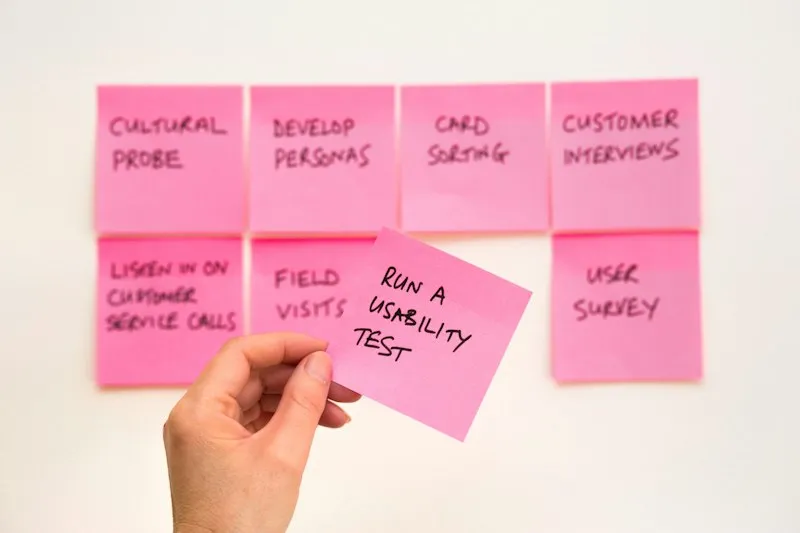
Set a single, achievable goal for your next work session - for example, 'read the introduction and write down three questions' rather than 'understand the chapter'. This builds confidence step by step. In the research, higher academic self-efficacy was consistently associated with less procrastination because confident students set goals they believed they could reach and sustained effort.
The studies compared students with higher and lower self-efficacy, not people before and after setting small goals. While the association is strong in several studies, one study found that self-efficacy did not predict procrastination when other variables were controlled. This means that setting a small goal is a reasonable starting point, but it may not be enough if other factors, such as a lack of interest in the task, are also at play.
Where the evidence stops
Limits of These Actions
These actions are drawn from research on academic procrastination in student populations and may not apply to every task or setting. The studies relied on self-reported beliefs and did not test these specific steps as interventions. If your difficulty stems from a clinical condition such as depression, anxiety, or an attention disorder, these suggestions are not a substitute for professional support.
Common questions
Could my lack of belief be about the task itself, not my ability?
Yes. Research suggests that low task value and high emotional cost are also associated with procrastination. If you do not find the task meaningful or it feels emotionally draining, you may delay it even when you believe you can succeed. Task value and self-efficacy are separate motivational beliefs that both influence whether you sustain effort.
What if I have high self-efficacy for some subjects but not others?
That is common. Academic self-efficacy is domain-specific - it reflects your judgment about your ability in a particular area, such as math or writing. You can have high confidence in one subject and low confidence in another, even if you have done well in both before. This is consistent with how self-efficacy is defined and measured in the research.
Is self-efficacy for self-regulation different from general self-confidence?
Yes. Self-efficacy for self-regulation refers specifically to your confidence in managing your own learning - for example, finishing homework by deadlines and concentrating on school subjects. This belief was a stronger predictor of procrastination than general academic self-efficacy or self-esteem in some studies. It is about your ability to regulate your behavior, not your overall self-worth.
Take it further
Your Trusted Evidence
When you look back at a similar task you succeeded at, what specific actions did you take that made it work, and which of those actions could you adapt for this current task?
Talk it out
Talk It Through
What is a specific step you have already taken on this task that you could tell me about?
Keep reading
 MomentsCan't get started because nothing feels good enoughWhen you feel stuck, focusing on strengths means starting with one step you already trust. A tool to shift your attention and build momentum.2 min read
 DecisionHow Focusing on Your Strengths Can Help You Stop ProcrastinatingWeigh three evidence-based strategies for using your strengths to overcome procrastination, from low-effort reminders to building self-control skills.4 min read
 ExplainerUnderstanding the Self-Efficacy MechanismLearn what self-efficacy is, how it shapes behavior, its link to procrastination, and how it is measured in research.4 min read
 TechniquesDoubt About Finishing Tasks: Comparing ApproachesCompare three approaches to doubt about finishing tasks: examining your beliefs, building self-regulation confidence, and checking motivation and ability3 min read
- OverviewUnderstanding the Self-Efficacy MechanismSelf-efficacy is your belief in your ability to succeed. This article explains how it works, its link to procrastination, and what research shows.3 min read
- ExplainerWhat Is Achievement Motivation Analysis?Achievement motivation analysis examines how the drive to accomplish goals affects behavior, task engagement, and procrastination.4 min read
References
Sources & evidence
4 research papers informed this article. The numbers beside each section link here, and each DOI opens the original paper.
Source 1:Why college students procrastinate in online courses: A self-regulated learning perspective
Cheng, Sheng-Lun, Xie, Kui (2021). Why college students procrastinate in online courses: A self-regulated learning perspective. DOI 10.1016/j.iheduc.2021.100807
Source 2:Academic Self-Efficacy and Postgraduate Procrastination: A Moderated Mediation Model
Liu, Guoqing, Cheng, Gang, Hu, Juan, Pan, Yun, et., al. (2020). Academic Self-Efficacy and Postgraduate Procrastination: A Moderated Mediation Model. DOI 10.3389/fpsyg.2020.01752
articleSource 3:Procrastination and Motivation of Undergraduates with Learning Disabilities: A Mixed‐Methods Inquiry
Klassen, Robert M., Krawchuk, Lindsey L., Lynch, Shane L., Rajani, Sukaina (2008). Procrastination and Motivation of Undergraduates with Learning Disabilities: A Mixed‐Methods Inquiry. DOI 10.1111/j.1540-5826.2008.00271.x
Source 4:Academic procrastination of undergraduates: Low self-efficacy to self-regulate predicts higher levels of procrastination
Klassen, Robert M., Krawchuk, Lindsey L., Rajani, Sukaina (2008). Academic procrastination of undergraduates: Low self-efficacy to self-regulate predicts higher levels of procrastination. DOI 10.1016/j.cedpsych.2007.07.001
A place to begin
Make room for your next step.
You do not need to have it all figured out. Bring one real moment to Mneno, notice what matters, and choose one step to try.
Name the moment
Describe what happened in your own words.
Notice what matters
Explore the needs and reactions beneath it.
Choose one step
Find a small action you can try next.
Start at your own pace