

Mood repair becomes a priority because people instinctively seek to reduce negative feelings in the moment, even when that means putting off important tasks. When faced with an anxiety-provoking or unpleasant task, the immediate relief of avoidance can feel more compelling than the distant reward of completion. This short-term mood regulation is a central mechanism in procrastination, where the goal of feeling better now overrides long-term goal pursuit.
Research on procrastination highlights that this preference for short-term mood repair is a form of self-regulatory failure. People delay tasks not because they are lazy, but because avoiding discomfort offers immediate emotional relief, even though it often leads to greater stress and guilt later. Understanding why mood repair takes priority can help you recognize the pattern and develop strategies to manage it.
What Mood Repair Looks Like in Action
When you have a task that feels aversive-such as studying for a difficult exam or completing a tedious work assignment-you may feel a strong urge to do something else that makes you feel better right away. This could be checking social media, watching a video, or tidying your desk. These activities serve as mood-regulating escapes, offering immediate relief from anxiety, worry, or boredom. The core pattern is that the short-term positive feeling of avoidance wins out over the long-term benefit of completing the task.
This behavior is not about enjoying the distraction itself; it is about regulating your emotional state. For example, you might scroll through social networking sites not because you need to, but mainly to change your mood and feel better. Researchers call this "mood modification procrastination." It functions as a coping strategy because you are seeking emotional relief through delay. However, the relief is temporary, and the negative feelings often return-sometimes compounded by guilt or anxiety about the postponed task.
Take it further
Discussing Mood Repair
Have you ever noticed yourself putting off a task just to feel better, even though you knew it would cause stress later?
Reflect in Mneno
Why Short-Term Mood Repair Is So Powerful

The drive to prioritize mood repair over long-term goals is rooted in how the brain responds to immediate versus delayed rewards. Avoiding an aversive task provides instant emotional relief, which is a powerful reinforcer. This immediate reward can be more compelling than the distant, uncertain benefits of completing the task, such as a good grade or a promotion. As a result, you may repeatedly choose the short-term mood boost even when you know it will cause problems later.
This pattern is especially strong when your self-control is low. Research shows that mood modification procrastination-using social media to feel better-is predicted by lower self-control. When your ability to regulate impulses is depleted, you are more likely to seek immediate mood repair. Additionally, competing temptations, like the promise of a more pleasant activity, become especially attractive when you are already feeling negative. They offer a quick escape from the discomfort of the task, making procrastination feel like a natural response to emotional distress.
How Emotion Regulation Skills Can Help

Improving your emotion regulation skills may help you resist the short-term mood repair provided by delaying tasks. Research indicates that better emotion regulation is associated with reductions in procrastination. When you are able to tolerate and modify aversive emotions without needing to escape them, you are less likely to prioritize immediate mood repair over your long-term goals.
Developing these skills involves learning to sit with uncomfortable feelings, such as anxiety or boredom, without immediately reacting to them. Instead of turning to a distraction, you can practice noticing the feeling and allowing it to pass. This does not mean ignoring your emotions; it means recognizing that the discomfort is temporary and that you can still take action despite it. Over time, strengthening your emotion regulation can reduce the automatic pull toward mood repair that fuels procrastination.
SourcesS5
The Risks of Downward Counterfactuals
Sometimes, after a poor performance or delay, people use downward counterfactuals to repair their mood-thinking "at least I didn't fail completely" or "it could have been worse." These thoughts can provide a short-term mood boost by restoring a positive sense of self. However, research shows that this strategy can backfire by reducing your motivation to change future behavior. While it protects your feelings in the moment, it may also allow you to avoid taking responsibility or making improvements.
This pattern illustrates a broader point: immediate mood repair strategies can protect the present self but leave the future self with the consequences of delayed action. If you rely on downward counterfactuals to feel better after procrastinating, you may not learn from the experience or develop better habits. Recognizing this trade-off can help you choose more adaptive ways to cope with negative feelings, such as problem-solving or accepting discomfort, rather than using mood repair that undermines long-term growth.
FAQ
Common questions
Each answer is linked to its research.
Does mood repair always lead to procrastination?
No, mood repair is a normal and healthy part of emotion regulation. Everyone seeks to feel better when they are distressed, and sometimes that means taking a break or engaging in a pleasant activity. The problem arises when the priority of short-term mood repair consistently overrides progress on important long-term goals. In the context of procrastination, the issue is not the desire to feel better, but the automatic choice of immediate relief over delayed rewards, especially when it leads to negative consequences like guilt, stress, and unfinished tasks. Recognizing the difference can help you use mood repair intentionally rather than reactively.
SourcesS1S2S10All sources
Can mood repair ever be a good thing for procrastination?
Mood repair itself is not inherently bad; it becomes problematic when it consistently interferes with goal pursuit. In some cases, a short break to improve your mood might help you return to a task with renewed energy. However, research on procrastination emphasizes that the automatic priority given to immediate mood repair-without considering the consequences-is what fuels delay. If you can choose to repair your mood in a way that does not undermine your goals, such as taking a brief walk or listening to music, it might be helpful. The key is to ensure that mood repair is a conscious choice, not a default escape from discomfort.
SourcesS3S8All sources
What is the difference between mood modification procrastination and other types of procrastination?
Mood modification procrastination specifically refers to using activities, like social media, primarily to change your mood and feel better, rather than to complete a task. It is a coping strategy aimed at emotional relief. Other types of procrastination may be driven by different factors, such as fear of failure, perfectionism, or lack of motivation. Research has found that mood modification procrastination is uniquely predicted by lower self-control, suggesting that people who struggle with impulse control are especially likely to use mood repair as a way to avoid aversive tasks. This distinction highlights the emotional regulation component of some procrastination, which may require different strategies than procrastination rooted in other causes.
SourcesS11S12All sources
Next read
Keep reading
Nearby guides picked by the editors of this article.
 MomentsI try to fix my mood before starting workYou try to feel better before starting work because your brain prioritizes short-term mood repair.3 min read
 DecisionWhy Do I Reach for a Quick Fix When I'm in a Bad Mood?Understanding the pull of short-term mood repair and making a deliberate choice between three evidence-supported strategies.3 min read
 How-toRecognizing Low Distress Tolerance When Stress HitsWhen stress hits, learning to notice low distress tolerance can help you pause before reaching for junk food. Simple awareness is a first step.3 min read
 TechniquesTurning to Distractions When in a Bad MoodExplore why you reach for distractions when feeling low-comparing simple mood repair, social media relief, and building emotion regulation skills.3 min read
 TechniquesWhy Fixing Your Mood Comes Before TasksUnderstand why short-term mood repair drives procrastination. Compare techniques to shift focus to tasks.3 min read
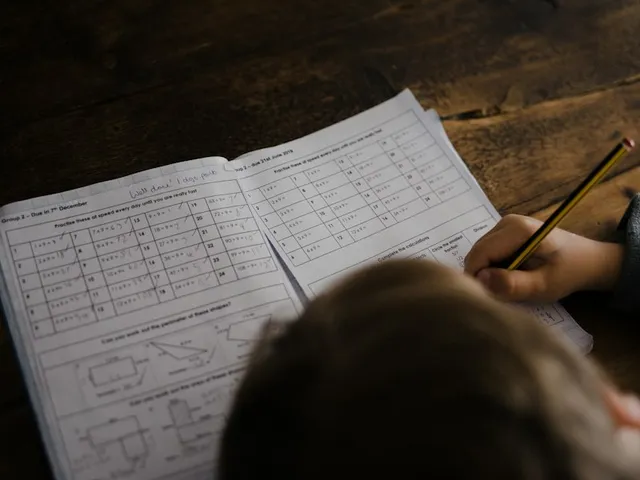 TechniquesUnderstanding Why You Avoid Math Homework Despite Knowing the ConsequencesThis article explores why you avoid math homework even when you know it will cause later regret, focusing on mood repair and short-term emotion regulation.3 min read
References
Sources & evidence
4 research papers informed this article. The numbers beside each section link here, and each DOI opens the original paper.
Source 1:Procrastination on social media: predictors of types, triggers and acceptance of countermeasures
Alblwi, Abdulaziz, McAlaney, John, Al Thani, Dena Ahmed S., Phalp, Keith, et., al. (2021). Procrastination on social media: predictors of types, triggers and acceptance of countermeasures. DOI 10.1007/s13278-021-00727-1
Source 2:Procrastination and the Priority of Short‐Term Mood Regulation: Consequences for Future Self
Sirois, Fuschia, Pychyl, Timothy (2013). Procrastination and the Priority of Short‐Term Mood Regulation: Consequences for Future Self. DOI 10.1111/spc3.12011
articleSource 3:Giving in when feeling less good: Procrastination, action control, and social temptations
Sirois, Fuschia M., Giguère, Benjamin (2018). Giving in when feeling less good: Procrastination, action control, and social temptations. DOI 10.1111/bjso.12243
articleSource 4:Overcome procrastination: Enhancing emotion regulation skills reduce procrastination
Eckert, Marcus, Ebert, David D, Lehr, Dirk, Sieland, Bernhard, et., al. (2016). Overcome procrastination: Enhancing emotion regulation skills reduce procrastination. DOI 10.1016/j.lindif.2016.10.001