

Emotion regulation refers to the processes by which people influence the emotions they have, when they have them, and how they experience and express them. Difficulties in emotion regulation are strongly linked to procrastination, because negative emotions such as fear of failure or discomfort intolerance can increase task avoidance and delay.
Research has found that procrastination is associated with deficits in emotion regulation, particularly the ability to tolerate and modify aversive emotions. Improvements in emotion regulation skills have been linked with reductions in procrastination, suggesting that better emotion regulation may help people resist the short-term mood repair provided by delaying tasks.
What Does Emotion Regulation Look Like?

Emotion regulation involves a range of strategies and skills. Creating a safe, calming, validating, and empathic environment can help soothe underregulated distress. Teaching regulation skills includes identifying triggers, avoiding triggers, labeling emotions, allowing and tolerating emotions, establishing working distance, increasing positive emotions, self-soothing, diaphragmatic breathing, relaxation, distraction, and meditative practice. Physiological soothing via parasympathetic activation is also important, and developing self-soothing abilities is a key aspect of emotion regulation.
These strategies are not one-size-fits-all. A crucial clinical judgment is knowing when to distract and down-regulate and when to facilitate emotion approach and intensification. Suppressing feelings can produce a rebound effect or 'bottle it up and then blow up' syndrome. While disengagement can be unhelpful in many situations, in other cases, people can effectively disengage from emotion to facilitate learning and memory. The goal is to create a working distance from overwhelming emotions without being consumed by them.
Take it further
Starting a Conversation
Have you ever noticed a time when an uncomfortable feeling made you avoid something you needed to do?
Reflect in Mneno
How Is Emotion Regulation Studied in Relation to Procrastination?
Researchers study the link between emotion regulation and procrastination using various methods. One approach is to measure habitual use of emotion regulation strategies, such as cognitive reappraisal and expressive suppression, using tools like the Emotion Regulation Questionnaire (ERQ). Another method involves cross-sectional analyses, which examine associations between emotion regulation skills and procrastination at a single point in time. One such analysis found that the relationship between emotion regulation skills and procrastination was mediated by the ability to tolerate aversive emotions, suggesting that low tolerance for unpleasant emotions is a pathway linking weaker regulation skills to more procrastination.
Neuroscience also offers clues. Individual differences in procrastination have been correlated with structural abnormalities and altered metabolism in the parahippocampal cortex and prefrontal cortex, regions involved in episodic future thinking, memory, and emotion regulation. Abnormalities in the ventromedial prefrontal cortex (vmPFC) and lateral prefrontal cortex (lPFC) may be linked to procrastination through weakened self-regulation, with the vmPFC implicated in emotion dysregulation and the lPFC supporting executive control. However, the proposed role of these brain regions in reducing procrastination by supporting emotion regulation remains uncertain and needs direct testing.
What Outcomes Are Associated With Emotion Regulation and Procrastination?

Research has found that procrastination is associated with deficits in emotion regulation, particularly the ability to tolerate and modify aversive emotions. Improvements in emotion regulation skills have been associated with reductions in procrastination, suggesting that better emotion regulation may help people resist the short-term mood repair provided by delaying tasks. This is supported by findings from emotion regulation training, which has been shown to reduce procrastination, indicating that changing emotion-regulation skills can be a useful intervention target.
The link between emotion regulation and procrastination may be particularly relevant under certain conditions. For example, the authors of one study hypothesize that stronger emotion regulation skills should reduce procrastination when workload rises because adaptive regulation lowers the need to avoid aversive tasks. They especially expect deficits in resilience and in the ability to modify aversive emotions to be linked with later increases in procrastination. These findings highlight the potential for emotion regulation skills to serve as a protective factor against procrastination, especially in demanding situations.
How Might Emotion Regulation and Procrastination Relate to Brain Function?
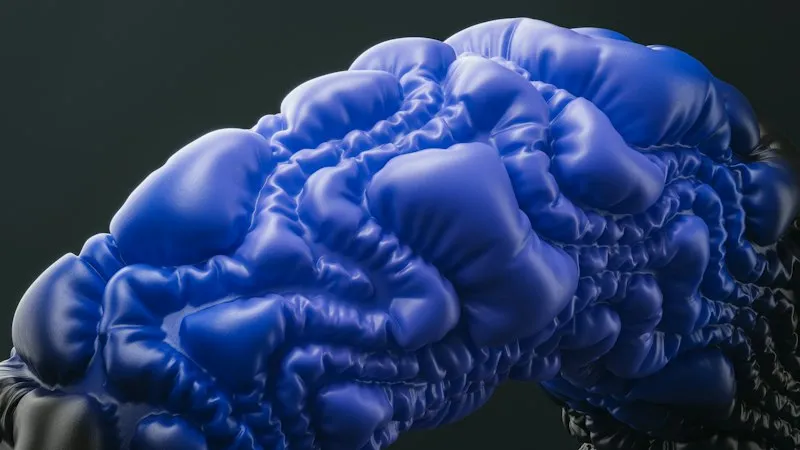
Neuroscientific research suggests a possible link between brain regions involved in emotion regulation and those implicated in procrastination. The vmPFC, which is involved in emotion dysregulation, and the lPFC, which supports executive control and voluntary attention reallocation, may be key areas. Abnormalities in these regions have been correlated with procrastination, potentially through weakened self-regulation. This raises the possibility that these brain areas could reduce procrastination by supporting emotion regulation, though this proposed role remains uncertain and needs direct testing.
Additionally, the parahippocampal cortex and prefrontal cortex, which are involved in episodic future thinking, memory, and emotion regulation, have shown structural abnormalities and altered spontaneous metabolism in relation to individual differences in procrastination. These neural correlates may link to procrastination through their involvement in imagining future outcomes and regulating emotions. While these findings are intriguing, they are correlational, and more research is needed to establish causal pathways and to understand how these brain regions interact in the context of procrastination and emotion regulation.
FAQ
Common questions
Each answer is linked to its research.
What are some specific emotion regulation skills that can help with procrastination?
Several specific emotion regulation skills have been identified as potentially helpful. These include labeling emotions, allowing and tolerating emotions, establishing working distance from overwhelming feelings, increasing positive emotions, and practicing self-soothing techniques such as diaphragmatic breathing and relaxation. Developing the ability to identify and avoid triggers is also part of emotion regulation. The key is not suppression, but rather managing emotions in a way that they do not become overwhelming and lead to task avoidance. For example, when distress is high, creating a working distance from core shame or feelings of vulnerability can help, rather than trying to eliminate the emotion entirely.
SourcesS2S9All sources
Is the link between emotion regulation and procrastination causal?
Current research suggests a strong association, but the causal direction is not definitively established. Studies show that emotion regulation skills and procrastination are linked, and that improvements in emotion regulation are associated with reductions in procrastination. However, much of the evidence is correlational, meaning it shows a relationship but does not prove that poor emotion regulation causes procrastination. It is possible that procrastination worsens emotion regulation, or that a third factor influences both. One study specifically hypothesized that stronger emotion regulation skills should reduce procrastination when workload rises, but this prediction has not been directly tested in a causal experiment. More research is needed to confirm whether improving emotion regulation directly leads to less procrastination.
SourcesS5S6S7All sources
Can emotion regulation training effectively reduce procrastination?
Yes, emotion regulation training has been shown to reduce procrastination in some studies. This finding suggests that changing emotion-regulation skills can be a useful intervention target. The training likely focuses on building skills such as identifying emotions, tolerating distress, and using adaptive strategies like cognitive reappraisal instead of suppression. However, the evidence base is still developing, and the effectiveness may depend on the individual and the specific training approach. It is also important to note that while these results are promising, they do not mean that emotion regulation training is a guaranteed cure for procrastination for everyone.
SourcesS11All sources
Next read
Keep reading
Nearby guides picked by the editors of this article.
 MomentsI try to fix my mood before starting workYou try to feel better before starting work because your brain prioritizes short-term mood repair.3 min read
 DecisionWhy Do I Reach for a Quick Fix When I'm in a Bad Mood?Understanding the pull of short-term mood repair and making a deliberate choice between three evidence-supported strategies.3 min read
 How-toRecognizing Low Distress Tolerance When Stress HitsWhen stress hits, learning to notice low distress tolerance can help you pause before reaching for junk food. Simple awareness is a first step.3 min read
 TechniquesTurning to Distractions When in a Bad MoodExplore why you reach for distractions when feeling low-comparing simple mood repair, social media relief, and building emotion regulation skills.3 min read
 TechniquesWhy Fixing Your Mood Comes Before TasksUnderstand why short-term mood repair drives procrastination. Compare techniques to shift focus to tasks.3 min read
 TechniquesWhy Acting on an Urge Leads to GuiltExplore why acting on an urge leads to guilt, based on research linking negative emotions and impulsivity to procrastination.2 min read
References
Sources & evidence
4 research papers informed this article. The numbers beside each section link here, and each DOI opens the original paper.
Source 1:Roles of Impulsivity, Motivation, and Emotion Regulation in Procrastination – Path Analysis and Comparison Between Students and Non-students
Wypych, Marek, Matuszewski, Jacek, Dragan, Wojciech Ł. (2018). Roles of Impulsivity, Motivation, and Emotion Regulation in Procrastination – Path Analysis and Comparison Between Students and Non-students. DOI 10.3389/fpsyg.2018.00891
articleSource 2:Emotion-focused psychotherapy.
Greenberg, Leslie S. (2019). Emotion-focused psychotherapy.. DOI 10.1037/0000130-004
articleSource 3:To do it now or later: The cognitive mechanisms and neural substrates underlying procrastination
Zhang, Shunmin, Liu, Peiwei, Feng, Tingyong (2019). To do it now or later: The cognitive mechanisms and neural substrates underlying procrastination. DOI 10.1002/wcs.1492
articleSource 4:Overcome procrastination: Enhancing emotion regulation skills reduce procrastination
Eckert, Marcus, Ebert, David D, Lehr, Dirk, Sieland, Bernhard, et., al. (2016). Overcome procrastination: Enhancing emotion regulation skills reduce procrastination. DOI 10.1016/j.lindif.2016.10.001