

Collective emotional intelligence is a group's shared capacity to identify, understand, and work with emotions that arise during interactions. It emerges from how members interact, creating norms that encourage emotional awareness and regulation, ultimately improving collaboration.
Rather than just the sum of individual skills, it is an emergent group property that helps teams recognize downward emotional spirals, devise creative solutions to disagreements, and keep task conflicts from becoming personal. Teams with higher collective emotional intelligence can manage emotions effectively, enhancing their overall performance.
How Collective Emotional Intelligence Differs from Individual Emotional Intelligence

While individual emotional intelligence involves managing one's own and others' emotions in problem solving and decision making, collective emotional intelligence operates at the group level. It is not simply the average of members' individual emotional intelligence but an emergent phenomenon arising from their interactions (Druskat & Wolff, 2001a; Kozlowski & Klein, 2000). This means a group can collectively handle emotions in ways that no single member could achieve alone.
The group develops shared norms for expressing, recognizing, and regulating emotions. For example, a team that collectively detects escalating tension can intervene before conflict damages relationships. This higher-level capacity helps decouple task-related disagreements from personal hostility, a key challenge in collaborative work. Individual emotional intelligence provides a foundation, but collective emotional intelligence requires intentional group-level practices.
Take it further
Start a Conversation
Have you noticed a time when a team you were on handled emotions especially well or poorly-what made the difference?
Reflect in Mneno
The Role of Group Emotional Regulation and Empathy

A core dimension of collective emotional intelligence is group emotional regulation, defined as the process of resolving discrepancies between current and desired emotional states. This involves maintaining emotions that benefit the group and dealing with disruptive emotions effectively. Teams that regulate emotions well can prevent minor frustrations from derailing progress.
Collective empathy is another crucial component. It refers to the ability to comprehend each other's feelings and reexperience them, which promotes social bonds and alleviates interpersonal tension. Research shows that collective empathy reduces relationship conflict by helping members stay attuned to one another's emotional states. Training in empathy, emotion management, and conflict norms can help teams build these capabilities, especially when destructive conflict arises.
How Collective Emotional Intelligence Reduces Conflict and Boosts Performance
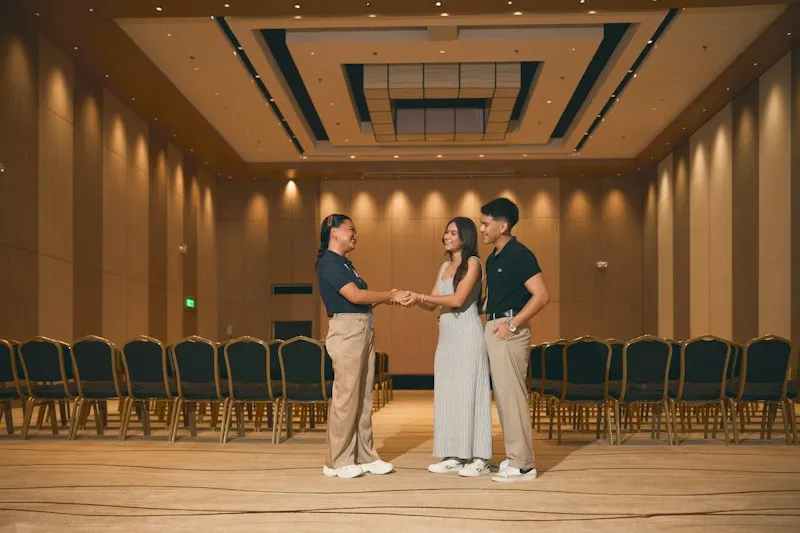
Collective emotional intelligence helps teams keep task conflict productive and prevent it from escalating into relationship conflict. By enabling members to recognize early signs of emotional spirals, groups can intervene quickly, keeping disagreements focused on the work rather than personal issues. This decoupling is critical because relationship conflict harms team performance.
Studies indicate that collective empathy indirectly improves team performance by reducing relationship conflict. When teams nurture empathy through activities like mindfulness training, perspective taking, and understanding each other's moods, they experience less interpersonal friction. Long-term groups, which have established norms and shared identity, are particularly effective at using emotion regulation to prevent task conflict from turning personal. This suggests that investing in collective emotional intelligence can lead to more cohesive and effective teams.
Building a Team Emotional Intelligence Climate
A team emotional intelligence climate consists of shared norms around empathic concern, emotion management, and conflict management. These norms shape how members perceive events-whether as conflicts or opportunities-and influence whether their reactions are constructive or destructive. This climate is developed over time through consistent interactions and intentional practices.
Team members can only empathize and manage emotions after they first recognize their own emotions and those of others. This self-awareness prerequisite forms the basis for building a supportive emotional climate. Reinforcing social interaction skills, especially the ability to read and respond to nonverbal cues, enhances collective empathy and further reduces relationship conflict. Teams experiencing destructive reactions to conflict may benefit from targeted training that helps leaders and members apply these skills in their daily work.
FAQ
Common questions
Each answer is linked to its research.
Can collective emotional intelligence be learned or developed in a team?
Yes, teams can develop collective emotional intelligence through intentional practices. Research recommends training in empathy, emotion management, and conflict management norms, especially for teams facing destructive conflict. Activities such as mindfulness training, exposure to human stories involving interpersonal communication, perspective taking, and mutual understanding of moods can nurture collective empathy. Long-term groups with established norms and shared identity may find these processes more effective, but any team can work toward building a supportive emotional climate over time.
SourcesS10S11S12All sources
How does collective emotional intelligence relate to team performance?
Collective emotional intelligence indirectly enhances team performance by reducing relationship conflict. Research shows that collective empathy fully mediates the relationship between empathy and team performance-meaning that empathy improves performance primarily by decreasing interpersonal tension. When teams manage emotions well, they keep disagreements task-focused and prevent personal conflicts, which otherwise harm productivity. Long-term groups with established norms can leverage this effect more effectively, but any team can benefit from fostering collective empathy and emotion regulation.
SourcesS3S11S12All sources
What are practical steps a team leader can take to improve collective emotional intelligence?
Team leaders can start by reinforcing members' social interaction skills, particularly the ability to read and respond to nonverbal cues, which enhances empathy. Leaders should also encourage self-awareness-helping members recognize their own emotions as a basis for understanding others. Building a team emotional intelligence climate involves establishing norms for empathic concern, emotion management, and conflict resolution. If destructive reactions to conflict arise, leaders can arrange training focused on empathy, emotion management, and conflict norms, applying these skills in real team situations to reduce relationship conflict and improve collaboration.
SourcesS6S7S8S10All sources
Next read
Keep reading
Nearby guides picked by the editors of this article.
 MomentsWhy do I always misread what people mean?Understand why you misread social cues and learn a quick tool to check your interpretation before reacting.2 min read
 DecisionWhy do I always seem to misinterpret what people mean?Misreading social cues happens to many people. Here are three strategies with different trade-offs to help you navigate misunderstandings.2 min read
 TechniquesUnderstanding Why We Misinterpret OthersExplore practices for improving understanding when you misinterpret what people say or do, based on empathy and social perception research.3 min read
 TechniquesBuilding Emotional Connection in Your TeamCompare three practices backed by research to strengthen emotional bonds and empathy in your team, from sharing daily experiences to managing conflict.2 min read
 ExplainerSocial Information Processing TheorySocial information processing theory explains how social context, cues, and emotions shape attitudes, behaviors, and beliefs.6 min read
 How-toHow to disagree with a coworker without damaging your relationshipLearn practical steps to handle workplace disagreements constructively, drawing on team conflict and emotional intelligence research.4 min read
References
Sources & evidence
4 research papers informed this article. The numbers beside each section link here, and each DOI opens the original paper.
Source 1:Decoupling task and relationship conflict: the role of intragroup emotional processing
Yang, Jixia, Mossholder, Kevin W. (2004). Decoupling task and relationship conflict: the role of intragroup emotional processing. DOI 10.1002/job.258
articleSource 2:Task and relationship conflict in short‐term and long‐term groups
Curşeu, Petru L., Boroş, Smaranda, Oerlemans, Leon A.G. (2012). Task and relationship conflict in short‐term and long‐term groups. DOI 10.1108/10444061211199331
Source 3:Modeling Team Performance
Lin, Chieh-Peng, Chen, Yi-Fan (2015). Modeling Team Performance. DOI 10.1177/1548051815616252
articleSource 4:The Influence of Team Emotional Intelligence Climate on Conflict and Team Members' Reactions to Conflict
Ayoko, Oluremi B., Callan, Victor J., Härtel, Charmine E. J. (2008). The Influence of Team Emotional Intelligence Climate on Conflict and Team Members' Reactions to Conflict. DOI 10.1177/1046496407304921
article